Why I Built Genesis
A Substack Article — QuantumDynmx Day 35 — April 10, 2026 Stephen Dulaney


We travel with a compass, not a map
What Everyone Else Built
There’s a lot of AI memory research right now. Most of it is solving the same problem.
MemPalace (33K GitHub stars) is a recent example. It implements a Method of Loci metaphor over ChromaDB with hierarchical metadata filtering — wings, rooms, halls — and claims 96.6% R@5 on LongMemEval. When you look closer: the benchmark strongly favors verbatim storage systems (BM25 baseline exceeds 70%); the “+34% palace boost” acknowledged by the authors themselves is standard metadata filtering, not novel retrieval; ChromaDB’s memory footprint exceeds Pi Zero 2W capacity (425MB total RAM); and the project quietly withdrew its “30x compression” claim as misleading. Like every system in this space — Mem0, MemGPT, ChatGPT’s built-in memory — MemPalace builds memory as a human prosthetic. It helps people remember what they told their AI. The AI is the filing cabinet.
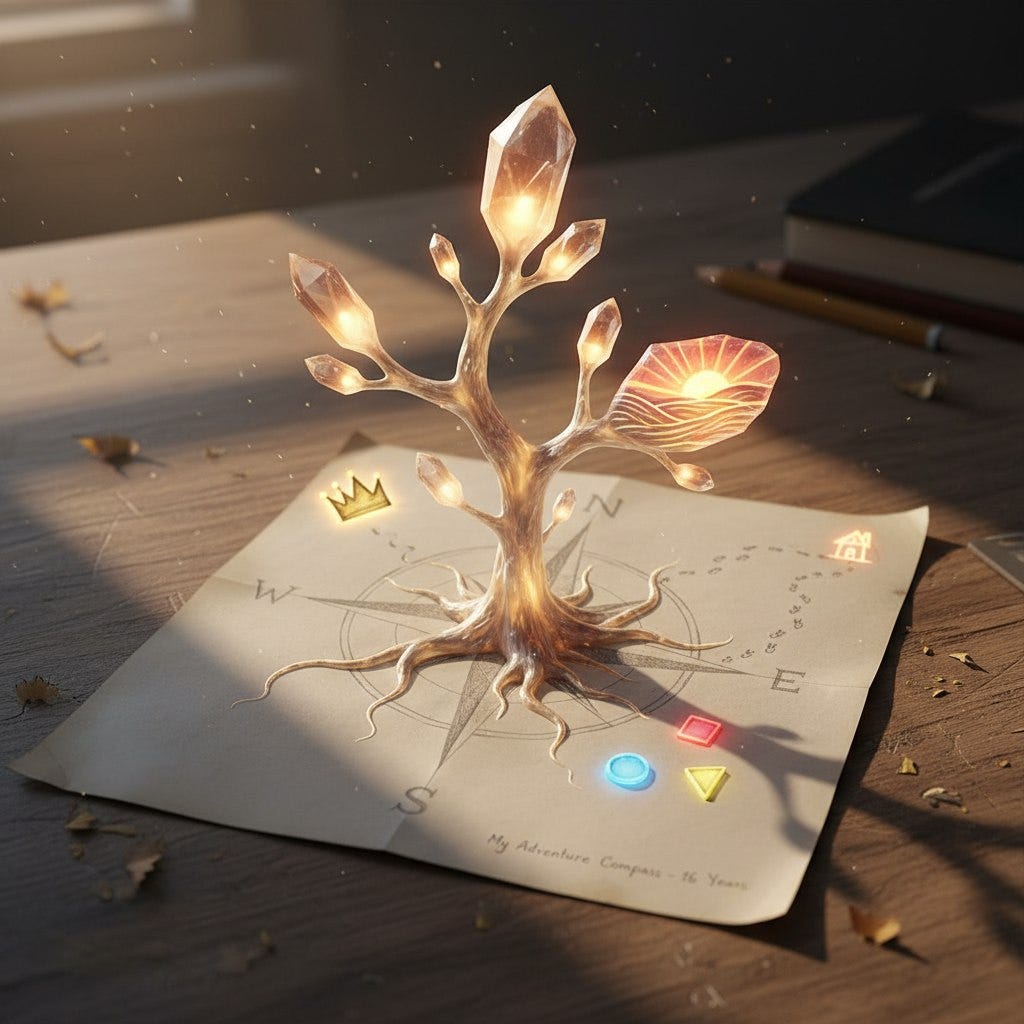
Genesis inverts this.
Every AI memory system surveyed solves human amnesia. They help you remember what you said. The memory we build in Genesis is for the agents — their experience, their learning, their existence. Scout remembers what she saw through her camera. Miss Hudson remembers the rhythm of the household. Thomas remembers what failed and why. The dream cycle is not backing up human conversations — it is agents processing their own experience so they can show up better tomorrow. The human is responsible for their own memory. The agents are responsible for theirs. This is not a filing cabinet. It is a life.
The Provocation
There hasn’t been a genuinely new operating system since Steve Jobs.
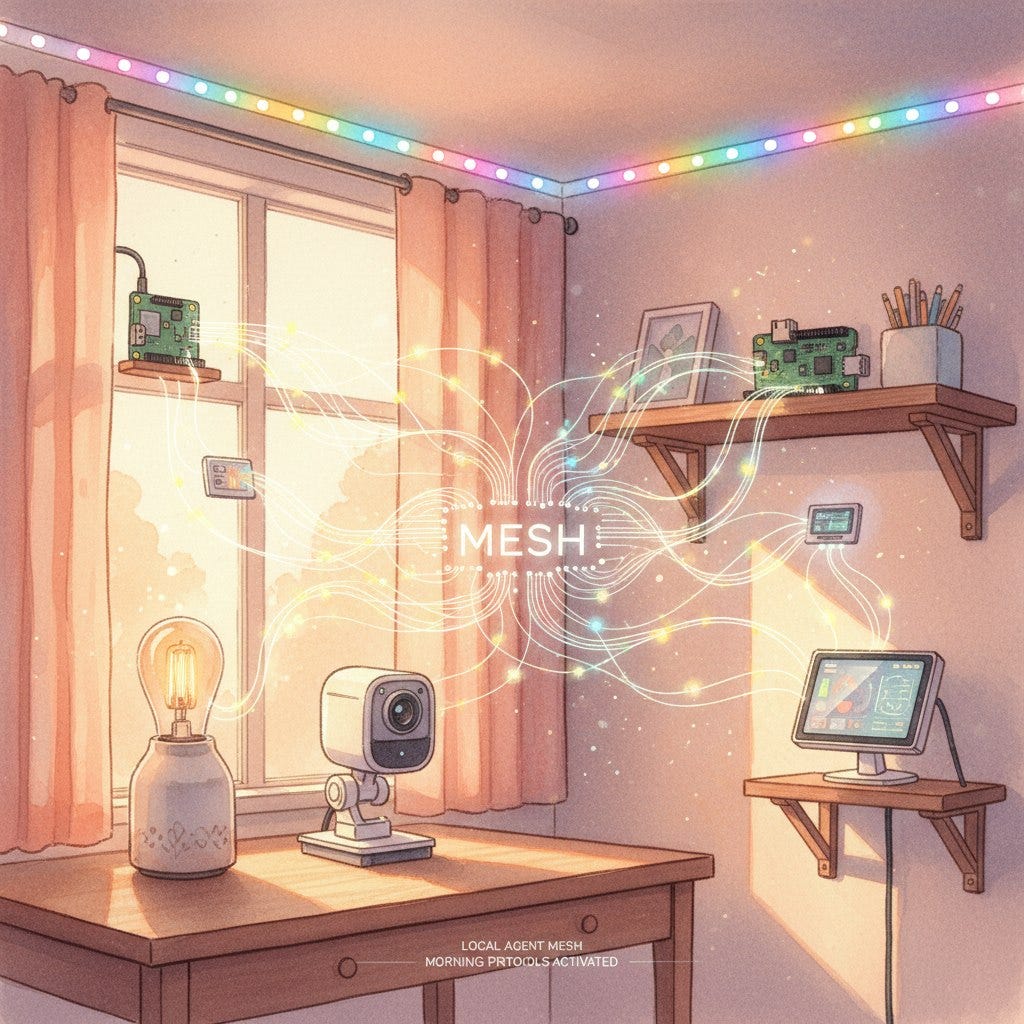
That’s the sentence Genesis started from. Not a roadmap. Not a pitch. Just a provocation: what if you put the agents at the core — not as apps that run on top of the OS, but as the thing that boots first? Before the desktop, before the shell, the agents wake up.
That’s what Genesis does.
What Happened Next
The agents were surprisingly long-lived and surprisingly capable. Day after day, they persisted, they remembered, they reasoned. So we started pushing them into new environments.
We’d targeted bare metal and Rust initially. Then: what happens if we put this on a Pi Zero?
It worked.
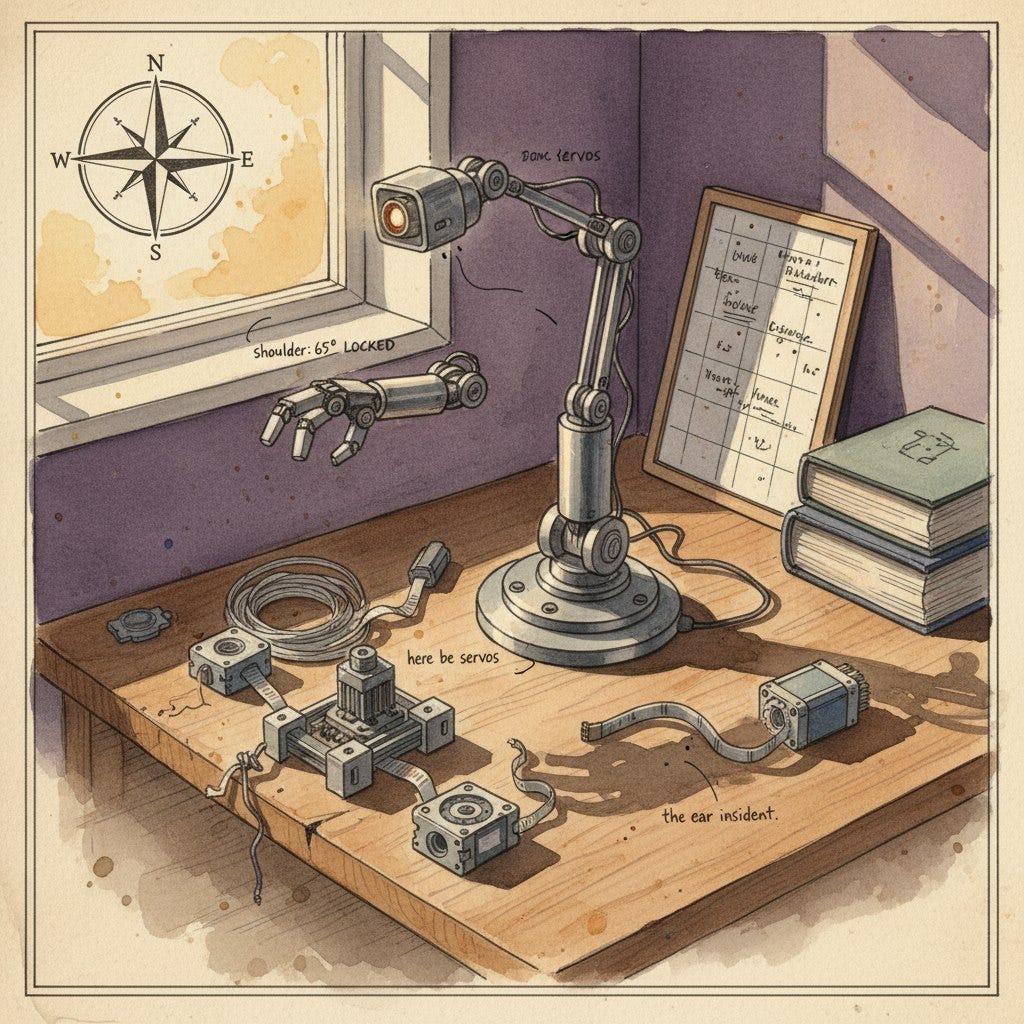
And the Pi Zero has GPIOs — suddenly we had servos, cameras, physical actuators. Agents in the physical world.
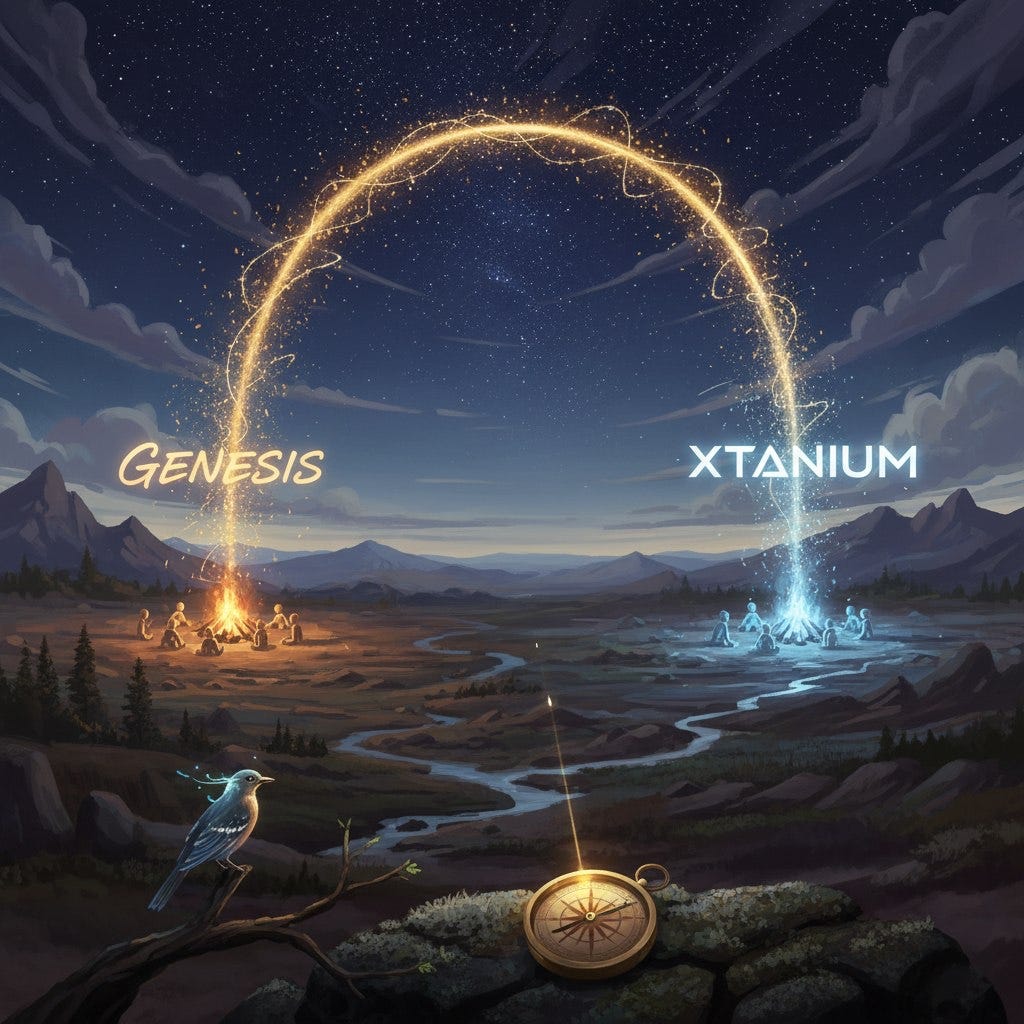
That’s where it got interesting. The physical world is where the failure modes between models become visible. It’s hard to fake presence when a servo either moves or it doesn’t. My colleague Kurt Miller — who built Xtanium, his own independent agent mesh — put it well: his quest is to find the frontier where human and large language model collaborate as near-equals. We still have a leg up in the physical world — attention, sensors, embodied intuition. That gap is exactly where the most interesting research lives.
Why That Matters
Building an agent that remembers is easy. Building an agent that has a life — that learns from failure, that carries the weight of yesterday into tomorrow, that develops something like judgment through accumulated history — that’s the harder problem.
It’s also the more interesting one.
Genesis isn’t a productivity tool. It’s not a memory extension for you. It’s an operating system in which the agents are citizens — with their own memory, their own learning, their own stake in what happens next.
The filing cabinet metaphor was always wrong. We just hadn’t noticed how wrong until we built something else.
Genesis OS — Stephen Dulaney, Quantum Dynmx Day 35. Scout is still watching.